
Author: Rafael Oliveira

Responsible Gambling

How to Gamble Responsibly and Stay in Control Online

Online gambling is available at almost any hour, and deposits can often be completed within seconds. That convenience may make it harder to notice how frequently someone is playing, how long a session has lasted, or how much money has moved through an account.

Understanding how to gamble responsibly and stay in control online requires more than choosing small bets. Players also need practical barriers that remain effective during excitement, frustration, boredom, or an unexpected losing streak.

Modern gambling websites may offer deposit limits, session reminders, account histories, temporary breaks, and self-exclusion. Banks and independent software providers may add further restrictions.

The UK Gambling Commission lists money limits, reality checks, time-outs, blocking software, bank controls, and self-exclusion among the available protection measures.

These tools cannot change game odds or guarantee responsible behavior. However, they can slow impulsive decisions, make spending more visible, and create valuable distance when gambling no longer feels controlled.

Use Legal and Regulated Operators

Before depositing, confirm that online gambling is legal in your location and that the operator holds the required licence.

A regulator cannot remove every risk, but licensing generally creates standards for fairness, identity checks, customer funds, complaints, and safer-gambling procedures.

Do not assume that professional design, recognizable payment logos, or large bonuses prove legitimacy. Verify the operator through the relevant regulator’s public register where one is available.

Unlicensed websites may provide weaker complaint routes and fewer practical protections. They may also ignore local self-exclusion arrangements or responsible-gambling requirements.

Set Deposit Limits Before Playing

A deposit limit restricts how much money can be transferred into an account during a selected period. It should be based on disposable income, not the maximum amount available in a bank account.

Set the limit while calm and before experiencing wins or losses. A boundary chosen during a session may be influenced by the desire to continue.

Remember that a deposit limit is not automatically the same as a loss limit. Withdrawals, unused balances, and previous deposits may be treated differently depending on the operator’s system, so read the exact definition before relying on it.

Activate Reality Checks

Online games can run continuously without the natural pauses created by travel, cash handling, or venue closing times. Reality checks interrupt play by displaying the amount of time that has elapsed.

The UK Gambling Commission defines a reality check as an on-screen display of session duration that the customer must acknowledge. Some operators may also show the current balance or betting activity.

Choose frequent reminders rather than assuming you will check the clock yourself. When the alert appears, step away briefly and decide whether continuing still fits the original plan.

Review Your Complete Gambling History

A single deposit may not appear significant, but repeated small payments can become substantial. Review transactions over a week or month rather than judging each wager separately.

Compare the account history with bank statements and household expenses. Include subscriptions, lottery tickets, sports bets, casino games, and gambling across different operators.

Tracking wins without recording losses creates a misleading picture. A useful record shows total deposits, total withdrawals, net spending, session length, and any borrowed money.

Add Bank and Device-Level Blocks

Operator tools cover only the accounts on which they are activated. Additional controls can reduce access across several websites.

Many banks provide gambling-payment blocks on debit cards or online banking services. Some include cooling-off periods that prevent an impulsive removal from taking effect immediately.

Blocking software can restrict access to gambling websites and apps across phones, tablets, and computers. The Gambling Commission lists both bank transaction blocks and device software as options for restricting gambling activity.

Use a Time-Out Before a Crisis

A time-out is appropriate when gambling feels unusually frequent, emotionally driven, or difficult to stop. It can also be used proactively after a stressful event or expensive session.

A cooling-off period creates space to review finances and habits without constant access to betting products. In Great Britain, operator time-outs can block online gambling for a temporary period, although exact options vary by company and jurisdiction.

During the break, unsubscribe from promotional messages, remove gambling apps, and plan alternative activities. A time-out is more effective when the empty time is deliberately replaced.

Know When to Choose Self-Exclusion

Self-exclusion is a stronger measure for someone who recognizes that gambling is causing harm and wants support to stop. Operators covered by an exclusion scheme should take reasonable steps to prevent access during the agreed period.

In Great Britain, Gamstop Online blocks access to online operators licensed in that market. Available exclusion periods include six months, one year, five years, or five years with automatic renewal. Other countries use different systems.

Self-exclusion works best alongside payment blocks, advertising restrictions, blocking software, and support from another person or professional service.

Online control improves when protective decisions are made before gambling begins. Use licensed operators, establish an affordable deposit limit, activate reality checks, and review your complete account history instead of focusing on individual wins.

Add bank and device-level blocks when operator settings are not strong enough. Take a time-out when gambling becomes emotionally driven, and use self-exclusion when continued access is causing harm or repeated attempts to cut back have failed.

Do not wait for a financial emergency before acting. Open your account settings today, review the tools available in your jurisdiction, and choose barriers that protect both your money and your peace of mind.


Casino Strategy

How Blackjack Basic Strategy Works With Every Hand Type

A blackjack strategy chart can look complicated at first. It contains player totals along one side, dealer upcards across the top, and abbreviations such as H, S, D, and SP inside the grid.

Once its structure is understood, however, the chart becomes a simple decision map. Understanding how blackjack basic strategy works begins with identifying the type of hand you hold.

Hard totals, soft totals, and pairs have different levels of flexibility and risk. The chart then matches that hand with the dealer’s visible card to recommend the mathematically strongest available move.

The instructions are produced by calculating the expected result of every legal decision. A strategy model considers possible future cards, dealer outcomes, bust probabilities, payouts, and table rules before selecting the action with the highest expected value.

The chart does not promise that the recommended move will win the current hand. It identifies the decision expected to perform best across many repetitions of the same situation.

Start With the Correct Strategy Chart

A blackjack chart applies only to the rules for which it was calculated. A chart for four or eight decks where the dealer stands on soft 17 can differ from one where the dealer hits soft 17.

Before using a guide, check the table sign or game information screen. Look for the number of decks, dealer soft-17 rule, blackjack payout, surrender availability, and doubling restrictions.

A correct decision from the wrong chart can become a small mathematical error. Although many recommendations remain the same, several important borderline hands change.

Reading the Hard-Total Section

A hard hand either contains no ace or has an ace that must count as 1. Examples include 9-7 for hard 16 and 10-4 for hard 14.

For a typical multi-deck chart, hard totals of 5 through 8 hit against every dealer upcard. A hard 12 stands against dealer cards 4 through 6 but hits against 2, 3, and 7 through ace. Hard 13 through 16 usually stand against 2 through 6 and hit against stronger cards.

These decisions may feel cautious or aggressive depending on the situation. The strategy is not trying to reach 21 every time. It balances the danger of busting against the probability that the dealer will finish with a stronger hand.

Reading the Soft-Total Section

A soft hand includes an ace that can count as 11 without taking the total over 21. Ace-7 is soft 18, while ace-6 is soft 17.

Soft totals can often take another card without immediately busting. For this reason, basic strategy sometimes recommends hitting or doubling totals that would normally stand if they were hard.

Under a common stand-on-soft-17 chart, ace-7 doubles against dealer cards 3 through 6, stands against 2, 7, and 8, and hits against 9, 10, or ace. Ace-8 and ace-9 normally stand.

The composition of the hand matters because soft 18 and hard 18 have the same displayed total but different levels of flexibility.

Reading the Pair-Splitting Section

A pair is handled separately because splitting creates two new hands and requires another wager. Official rules commonly permit equal-value cards to be separated, although restrictions on resplitting aces and doubling afterward vary.

Aces are normally split because one ace can begin each new hand with a strong chance of reaching 21. Eights are split because hard 16 is a weak starting total, while two separate hands beginning with 8 create better possibilities.

Tens are normally kept together as 20. Fives are not usually split because they already form hard 10, an effective doubling hand against several dealer cards.

Understanding Double-Down Instructions

Doubling down allows the player to increase the wager in exchange for receiving only one additional card. The exact amount permitted and eligible starting hands depend on the casino’s rules.

A chart marks a double when the player has a favorable combination of starting total and dealer weakness. For example, hard 10 generally doubles against dealer cards 2 through 9, while hard 9 doubles against 3 through 6 in a common multi-deck game.

Some charts use a symbol meaning “double if allowed; otherwise hit.” Players should learn the chart legend instead of assuming every D instruction has the same fallback.

How Surrender Fits Into Basic Strategy

Surrender allows a player to end a poor hand immediately and lose only half the original wager. It is not offered at every table, and some blackjack versions specifically exclude it.

When available, late surrender may be recommended for selected weak totals against powerful dealer upcards. The decision can reduce the expected loss compared with playing the hand normally.

A strategy chart without surrender assumes the option is unavailable. Players should not insert surrender recommendations from another chart into a game with different rules.

Practical Hand Examples

Imagine holding 10-6 while the dealer shows 6. The hand is hard 16. A standard multi-deck chart recommends standing because the dealer’s weak card creates a meaningful chance of busting.

Now keep the same hard 16 but change the dealer’s card to 10. The recommended action becomes hitting because standing leaves the player likely to lose against a strong dealer total.

For another example, ace-7 against dealer 5 commonly calls for doubling. The ace protects the hand from an immediate bust, while the dealer’s upcard creates a favorable opportunity to place an additional wager.

Common Strategy Mistakes

One frequent mistake is using the total without checking whether the hand is soft. Another is treating every pair automatically as a split.

Players also stand too often on weak totals because they are afraid of busting. In other situations, they hit against a weak dealer card when the better decision is to let the dealer take the drawing risk.

The chart removes emotion from these choices. It recommends the same action whether the player is winning, losing, or recovering from a difficult sequence.

Blackjack basic strategy organizes every starting hand into hard totals, soft totals, or pairs and then compares it with the dealer’s upcard.

This structure explains why identical totals can require different actions and why splitting, doubling, or standing sometimes produces better expected results than simply trying to move closer to 21.

Learn the chart in sections rather than memorizing every square at once. Begin with hard totals, continue with soft hands, and finish with pairs and special options. Most importantly, confirm that your chart matches the rules of the table.

Practice without real-money stakes, maintain a fixed budget, and remember that mathematically correct play reduces the house edge but does not guarantee winnings.

Casino Strategy

The Mathematics Behind Roulette Bets for Every Wager Type

A roulette table gives players many ways to bet on the same spin. One person may select a single number, another may cover an entire dozen, and a third may choose red. These wagers feel very different because their hit rates and payouts vary dramatically.

However, the mathematics behind roulette bets shows that a higher chance of winning does not automatically mean a better long-term return. Casinos adjust each payout according to the number of pockets covered.

The reward becomes smaller as the probability of winning increases. The result is a collection of bets that offer different levels of volatility while usually preserving the same house advantage.

A straight-up wager may lose repeatedly before producing a large return. An even-money bet wins more frequently, but every zero still creates a mathematical imbalance in the casino’s favor.

Learning how each bet works can help players understand what they are risking on every spin. It also makes it easier to distinguish winning frequency, payout size, expected loss, and overall profitability – four concepts that are often confused.

Straight-Up Bets: High Payout, Low Probability

A straight-up wager covers one number and normally pays 35 to 1. Official roulette paytables use this payout for any single-number selection.

On a European wheel, the probability of winning is 1/37, or approximately 2.70%. A $5 winning bet generates $175 in profit, plus the return of the original $5 stake.

The chance of losing is 36/37, or approximately 97.30%. The attractive payout is therefore accompanied by long losing sequences and substantial short-term volatility.

Split, Street, and Corner Bets

A split covers two adjacent numbers and pays 17 to 1. Its European probability is 2/37, or approximately 5.41%.

A street covers three numbers and pays 11 to 1, producing a probability of 3/37, or about 8.11%. A corner includes four numbers and pays 8 to 1, giving it a 4/37 probability, or roughly 10.81%.

Although the hit rate improves as more numbers are included, the payout decreases proportionally. Standard regulated paytables confirm the 17-to-1, 11-to-1, and 8-to-1 payout structure.

Six-Line Bets

A six-line wager covers six numbers across two neighboring rows. It pays 5 to 1 and has a European winning probability of 6/37, or approximately 16.22%.

For a $10 bet, a win produces $50 in profit and returns the original stake. A loss costs $10.

Its expected value is:

(6/37 × $50) − (31/37 × $10) = approximately −$0.27

The expected loss is again about 2.70% of the original wager.

Dozens and Columns

Dozen bets cover 1–12, 13–24, or 25–36. Column wagers cover one of the three vertical groups on the layout. Each includes 12 numbers and pays 2 to 1.

The probability of success on a European wheel is 12/37, or approximately 32.43%. The remaining 25 pockets create a loss.

A $30 winning bet earns $60 in profit. Its expected loss per spin is approximately $0.81, again equal to about 2.70% of the amount wagered.

Even-Money Outside Bets

Red or black, odd or even, and 1–18 or 19–36 each cover 18 numbers. They pay 1 to 1.

Players sometimes describe these wagers as having a 50% chance, but that is not mathematically correct. On a European wheel, the probability is 18/37, or approximately 48.65%, because zero belongs to neither side.

On an American wheel, the probability falls to 18/38, or approximately 47.37%, because both 0 and 00 cause a standard outside bet to lose. Official double-zero rules state that outside wagers lose when either zero appears.

House Edge Versus Volatility

House edge measures the average long-term disadvantage. Volatility describes how widely short-term results may fluctuate.

A straight-up bet and a red wager can carry the same European house edge, but their experiences are very different. Red produces smaller and more frequent wins. A single number generates rare but much larger payouts.

Therefore, lower volatility does not mean the casino advantage has disappeared. It simply changes the distribution of wins and losses.

European and American Roulette Compared

European roulette uses one zero, creating a standard house edge of approximately 2.70%. American roulette uses both 0 and 00, increasing the edge to approximately 5.26%.

Consider 100 wagers of $20, representing $2,000 in total action. The theoretical expected loss is approximately $54 on a European wheel and around $105.26 on an American wheel.

These are long-run averages, not guaranteed session results. A player might finish ahead after 100 spins, but repeated play gives the built-in mathematical edge more opportunities to influence the outcome.

Why Covering More Numbers Does Not Beat the Game

Players sometimes place chips on many numbers to increase the chance that something wins. This can produce more frequent successful outcomes, but it also requires a larger total stake.

For example, placing $1 on 18 individual numbers costs $18 per spin. A winning number earns $35 from one chip, but the other 17 chips lose. The net profit is therefore $18, while losing outcomes cost the full $18.

Coverage changes the pattern of results, not the underlying expected value.

Every roulette wager combines three elements: the number of pockets covered, the payout offered, and the probability of success. Straight-up bets provide the largest standard reward but have the lowest hit rate.

Outside bets win more frequently but produce smaller returns. On a normal single-zero table, most of these wagers retain the same 2.70% house edge.

The most useful mathematical decision is generally choosing the wheel rather than searching for a magical bet type. A European wheel exposes less money to the house edge than a standard American version.

Check the rules before playing, keep wagers small relative to your budget, and remember that frequent wins do not necessarily create a positive expected return.

Payment Methods

How Long Do Casino Withdrawals Usually Take by Payment Method?

The payment method used for an online casino withdrawal can determine whether funds arrive within minutes or several business days. Although casinos often advertise fast payouts, the final delivery time depends on more than the operator.

Banks, card networks, digital wallets, cryptocurrency networks, and regional payment systems all follow different procedures. This is why the question “How long do casino withdrawals usually take?” does not have one universal answer.

An e-wallet payout may be available soon after approval, while a traditional bank transfer could still be moving through clearing systems several days later. A cryptocurrency transaction may be transmitted quickly but remain pending until the required blockchain confirmations are completed.

Players should also distinguish between casino processing time and payment-provider processing time. The operator must first approve the request, perform any necessary security checks, and send the transaction.

Only then can the chosen provider begin delivering the money. Comparing the complete process is essential when selecting a casino payment method.

E-Wallets: Often the Fastest Option

E-wallets such as PayPal, Skrill, and Neteller can provide relatively quick access to approved withdrawals. Because the wallet acts as an intermediary, players do not always need to wait for a conventional bank transfer before seeing the balance.

The funds may still take longer if they are transferred from the wallet to a bank account. PayPal’s instant transfer usually completes within minutes, while a standard bank transfer may take betweehe market.

Card Withdrawals: Usually One to Three Days

Debit card withdrawals are familiar and convenient, but not every card can receive an online gambling payout. The operator and card issuer must support the relevant payment channel.

Skrill states that withdrawals to eligible Visa cards should arrive within three business days. Neteller provess days.

Some card-based services can be faster. Visa Direct supports real-time transfers in eligible markets, although availability varies according to the banuirements.

Bank Transfers: Reliable but Slower

Traditional bank transfers commonly take between one and five business days. Domestic transfers are generally faster than international withdrawals involving several banks or currencies.

Trustly says standard bank payouts generally require no more than one business day but can take up to three days. Its US ACH withdrawals take approximately one to three business days,ne to four.

Weekends and public holidays can extend the calendar wait because they are not normally treated as business days.

Instant Bank Payment Systems

Modern pay-by-bank and real-time payment systems can reduce withdrawal times significantly. However, the service can only begin processing the transaction after receiving approval and payment instructions from the casino.

Interac explains that its Canadian e-Transfers are almost instant but may require up to 30 minutes, pating financial institution.

Trustly also supports instant payouts to qualifying banks through real-time payment networks. If the recipient’s institution is not eligible, the paymenlower standard bank channel.

Cryptocurrency Withdrawals

A cryptocurrency casino withdrawal can sometimes reach a digital wallet within minutes. The exact timeframe depends on the blockchain, network traffic, transaction fee, and required number of confirmations.

Bitcoin has an average block time of approximately ten minutes. A platform may wait for multiple blocks before treating the payment as final, meaning that firmation.

Crypto payments are generally irreversible. Players should double-check the wallet address, selected network, and supported asset before confirming a withdrawal.

Verification Can Affect Every Method

Identity verification is one of the most common reasons a first casino withdrawal takes longer. Operators may need to confirm the player’s name, age, address, payment ownership, or source of funds.

The UK Gambling Commission says operators should explain what identity documents may be required before a player deposits. Businesses should also request necessary information prwal stage.

Submitting clear, current documents and using a payment account in the same legal name can reduce avoidable delays.

How to Choose a Faster Withdrawal Method

Start by checking whether the method supports both deposits and withdrawals. Some options work well for funding an account but cannot receive winnings, forcing the player to register another payment channel.

Review the casino’s internal approval period separately from the provider’s estimate. Also examine transaction fees, withdrawal limits, supported currencies, verification rules, and weekend processing.

The fastest advertised option is only useful when it is available in the player’s country and supported by the receiving bank.

How long do casino withdrawals usually take by payment method? E-wallet and instant banking payouts can arrive within minutes after approval.

Eligible card withdrawals commonly require up to three business days, while bank transfers typically take one to five. Cryptocurrency can be fast, but confirmation requirements and network conditions create variation.

To avoid unnecessary waiting, select a withdrawal-compatible method before making a deposit. Verify your identity early, enter payment details carefully, and check whether weekends or holidays affect processing.

Use only licensed operators with transparent payout policies, keep your transaction confirmation, and contact support if the published withdrawal timeframe has passed without a clear explanation.

Payment Methods

The Most Common Online Casino Payment Methods Compared

Online casino cashiers can display many logos, but a larger selection does not always make the decision easier.

Players often focus on instant deposits and overlook what matters later: withdrawal support, casino approval time, provider fees, currency conversion, and identity verification.

A fast deposit can become inconvenient when winnings must be redirected through another channel. A useful comparison of the most common online casino payment methods examines the full transaction journey.

Cards offer familiarity, e-wallets separate casino activity from personal banking, bank payments provide direct transfers, and prepaid vouchers support tighter spending control.

Cryptocurrency adds flexibility but also brings irreversible transactions and price risk. No method is best for every player or country.

Operators, banks, providers, and local laws apply different rules, so practical comparison matters more than brand recognition.

Reviewing these details before registration also makes future deposits, refunds, verification requests, and withdrawals easier to understand and compare clearly.

Cards: Familiar but Region-Dependent

Debit and credit cards are easy to understand because many users already have them. Deposits are commonly authorized quickly, and card networks use established fraud controls and dispute procedures.

Acceptance can still vary by issuer and jurisdiction. Great Britain’s licensed market prohibits gambling with credit cards, including credit-funded wallet payments, to reduce gambling with borrowed money.

Debit cards may remain available, but a bank can independently reject a transaction.

E-Wallets: Fast and Convenient

E-wallets can be attractive when both deposits and withdrawals are supported. Skrill promotes quick gaming payments, while Neteller allows online payments where cards may not work. Users also avoid entering card details into every casino account.

Wallet funding, foreign-exchange, withdrawal, or inactivity charges may apply. Casino bonuses can also exclude certain wallet deposits, so promotional terms should be checked separately.

Bank Transfers: Direct but Sometimes Slower

Conventional bank transfers offer a direct route between financial accounts. They may suit larger payments and users who do not want an additional wallet, but settlement can take longer when banks, currencies, or national systems differ.

Pay-by-bank services improve this model by using online-banking authentication. Trustly markets instant deposits and fast payouts for gaming, although merchant approval and bank handling can still affect the final withdrawal time.

Prepaid Vouchers: Strong Spending Control

Prepaid vouchers are funded in advance, so they can limit deposits to the purchased balance. PaysafeCard lets users pay through a 16-digit code without a bank account or credit card, reducing the financial information shared at checkout.

Their weakness is cashing out. A voucher may support deposits only, requiring a different verified withdrawal method. Account limits, fees, and registration rules should also be reviewed.

Cryptocurrency: Flexible but Irreversible

Crypto payments can be processed outside normal banking hours and may appeal to users familiar with digital wallets. Transaction records are stored on a blockchain, but that does not guarantee that a casino is licensed, fair, or financially reliable.

Transfers normally cannot be reversed after confirmation. Network congestion can affect fees or settlement, while exchange-rate movements can change the payment’s value. The FCA warns of volatility, cyberattacks, and firm-failure risks.

Comparing Deposit and Withdrawal Speed

“Instant” usually describes the deposit reaching the casino, not the entire withdrawal process. A payout may first pass through internal review, identity checks, bonus verification, and payment-provider processing.

For example, Trustly notes that a bank payout may generally take one business day and sometimes up to three, depending on banking and merchant factors. A transparent casino should publish separate estimated times for approval and payment delivery.

Comparing Fees, Currency, and Security

Always calculate the total cost rather than looking only for a “free deposit.” A method may charge nothing for funding but apply a withdrawal or currency-conversion fee.

If a hypothetical 2.5% exchange fee applies to a $100 transaction, the cost is $2.50 before any casino charge.

Security also depends on the operator. PCI DSS provides technical and operational requirements for protecting payment account data, but players should still use strong passwords, two-factor authentication, and licensed websites.

The most common online casino payment methods differ most clearly in withdrawal support, processing time, fees, privacy, and regional availability.

Cards provide familiarity, e-wallets can improve convenience, bank transfers offer direct settlement, prepaid vouchers encourage firm limits, and cryptocurrency adds flexibility with higher operational risk.

Compare the complete deposit-to-withdrawal process before choosing. Read the cashier terms, verify the provider’s fees, complete identity checks early, and confirm that the method is registered in your name.

Most importantly, use only licensed operators, set a fixed spending limit, keep transaction records, and treat gambling as paid entertainment rather than a way to earn income.

Live Casino

Live Casino Etiquette Every Player Should Know About Chat and Dealers

Human interaction is one of the main reasons players choose live casino games instead of automated tables. A dealer welcomes participants, announces results, responds to selected messages, and creates an atmosphere closer to a physical casino.

That interaction can also lead to misunderstandings. Some players expect the dealer to provide strategy advice, respond to every chat message, explain account problems, or influence the result.

Others become frustrated when another blackjack participant makes an unexpected decision or when a losing roulette sequence continues. Understanding live casino etiquette every player should know helps establish realistic expectations.

Dealers conduct the game, but they are not personal advisers, customer-support agents, or opponents trying to make a particular individual lose.

Other participants are sharing the same streamed environment but remain responsible for their own wagers. Polite communication should be combined with practical awareness.

Players should read the table rules, avoid distracting messages, protect private information, and stop when their predetermined limit is reached. Courtesy makes the session more pleasant, but responsible control remains more important than social pressure.

Greet the Dealer Without Expecting a Personal Conversation

A simple greeting or thank-you message is usually appropriate when chat is available. Dealers may acknowledge players verbally, particularly at smaller tables.

However, live rooms can contain many participants. The dealer must follow timing, dealing, and settlement procedures, so responding to every message may be impossible.

Do not repeatedly post the same comment to gain attention. Silence is not disrespect, and a delayed answer does not indicate that the dealer is ignoring you personally.

Keep Chat Relevant and Respectful

Live chat should remain suitable for a shared public environment. Avoid abusive language, discriminatory remarks, arguments, advertising, spam, or sexually inappropriate comments.

Do not post accusations of cheating simply because several rounds produced unfavorable results. Regulated live dealer operations in Great Britain must be fair and independently auditable, with trained staff, supervision, access controls, and recorded dealer activity.

A genuine concern should be documented and sent to customer support. Public arguments rarely resolve technical, account, or payment disputes.

Never Share Sensitive Information

The live chat is not the correct place to discuss deposits, withdrawals, identity documents, payment cards, or account passwords. Other participants may be able to read the conversation.

Never share a one-time authentication code or respond to someone claiming privately to represent the casino. Official support should be accessed through the verified website or application.

Before registering, players can check a business through the appropriate regulator’s official register. The UK Gambling Commission, for example, maintains searchable records of licensed operators and regulatory actions.

Understand What the Dealer Can and Cannot Do

The dealer conducts the physical game. They may deal cards, spin a roulette wheel, announce winning positions, and explain a basic procedure when time allows.

They generally cannot change payouts, reverse transactions, approve withdrawals, adjust your account balance, or offer individualized gambling advice. Those issues belong to the operator’s customer-service or payments department.

Live casino results rely on physical equipment such as decks of cards and roulette wheels. Regulatory controls may cover the supply, installation, operation, and integrity of that equipment.

The dealer must follow the approved process rather than respond to a player’s preferred outcome.

Avoid Blaming Blackjack Decisions on Other Players

Blackjack often creates tension because several hands are dealt from the same shoe. A participant may request a card that another person believes should have remained available for the dealer.

The next card was unknown before the decision. Claiming that another player “took the dealer’s bust card” uses hindsight rather than evidence that the person caused the result.

Allow each participant to make their own permitted choices. Advice should be offered only when requested and when table-chat rules allow it. Insults or pressure can create an unpleasant atmosphere without changing the completed hand.

Do Not Delay the Table Unnecessarily

Live games follow betting and decision timers. In blackjack, a player may receive a limited period to hit, stand, double, or split. In roulette and baccarat, all wagers must be placed before betting closes.

Use the available time carefully, but avoid intentional delays. Repeatedly waiting until the final second can disrupt the pace and increase the chance of connection-related mistakes.

Review the game rules before joining. British standards require relevant information about gameplay, prizes, payouts, and chances of winning to be available so customers can make informed decisions.

Treat Side Bets as Separate Wagers

Side bets are optional, even when they are visually prominent. Blackjack pairs, baccarat ties, roulette multipliers, and progressive jackpot wagers each have their own conditions and payouts.

Do not pressure other players to copy your selections or celebrate an optional wager as though it were part of the required game. Check the total amount displayed before confirming the round.

Remote gambling systems regulated in Great Britain must provide clear information about the money being gambled, including conversions into chips or credits. This figure is more useful than focusing only on the smallest chip denomination.

Know When to End the Conversation and Session

A friendly dealer can make the experience feel social, but the relationship remains part of a gambling service. Do not continue spending simply because you enjoy the conversation or feel uncomfortable leaving.

A dealer change, new card shoe, or fresh roulette sequence does not create an obligation to stay. Leave after a completed round whenever your time or money limit has been reached.

Regulatory standards also require tools that help remote customers keep track of time, including reality-check facilities in applicable products. Use those reminders as stopping points rather than dismissing them automatically.

Good live casino etiquette begins with treating dealers and players as people sharing the same digital space. Keep chat polite, avoid personal attacks, and never publish sensitive information.

Dealers manage physical gameplay but cannot solve account disputes, guarantee outcomes, or provide personal financial advice. Other participants are free to make their own blackjack decisions, and optional side bets should never become a source of pressure.

During your next session, observe the table’s communication style before posting. Read the rules, verify the total wager, and use official support for technical or financial questions.

Most importantly, do not let conversation extend a session beyond its planned limit. Be courteous, remain private, and leave when gambling is no longer comfortably within your entertainment budget.

Live Casino

What to Expect in a First Live Casino Session: Rules and Etiquette

A live casino session sits somewhere between a physical casino visit and a standard online game. You see a real dealer and real equipment, but you place wagers through digital chips, buttons, and betting areas displayed on your screen.

This combination can create several questions for beginners. Should you speak to the dealer? What happens if you join halfway through a shoe? Can other players affect your cards? What should you do when the video freezes?

Understanding the answers makes the first session less stressful and reduces the likelihood of accidental bets. Knowing what to expect during your first live casino session also involves understanding basic table etiquette.

You are sharing a streamed table with other participants, but each accepted wager is recorded through your own casino account. You do not need to copy another player’s betting pattern or respond to pressure in the chat.

Before joining, use a licensed operator, read the table rules, and decide on a strict entertainment budget. Live presentation may feel more personal, but the financial risk remains the same as with other real-money casino products.

Joining a Game Already in Progress

When you enter a live table, the dealer may already be completing a round. You can usually watch immediately, but you must wait for the next betting period before participating.

In blackjack, you might enter during an active shoe rather than when a newly shuffled set of cards begins. Baccarat tables may also display many previous results. These histories are informational and do not prove that the next hand must continue or reverse a trend.

Do not rush to join because only a few seconds remain. Waiting for the following round gives you time to check the table minimum, rules, balance, and available chip values.

Learning the Betting Interface

Although the live video attracts most attention, the betting interface is where mistakes usually occur. It can contain several main wagers, side bets, repeat-bet controls, statistics, and game-history buttons.

Choose a digital chip and tap the correct betting position. Before the timer ends, verify the displayed total rather than assuming every chip represents the same value.

British technical standards require remote gambling platforms to show sufficient information about the wager before commitment, including its total value and relevant details.

Clear unfamiliar wagers instead of leaving them on the layout accidentally. A side bet is a separate financial commitment, not an automatic part of the main wager.

Respecting the Betting Countdown

The countdown ensures that all bets are registered before the dealer reveals information that could affect the round. When betting closes, the interface should stop accepting new chips.

Avoid repeatedly tapping during the final seconds. Connection latency can make the visual timer appear slightly ahead of or behind the server’s accepted betting window.

If your wager is rejected, wait for the next round. Do not assume money was taken unless the balance or transaction history confirms it.

The system should provide clear account and transaction information showing movement of funds into and out of gambling products.

Understanding Dealer and Player Roles

The dealer follows established studio procedures. In blackjack, this includes dealing cards and acting according to the table’s dealer rules. In roulette, the dealer operates the wheel and announces the winning number. Baccarat cards are drawn according to predetermined procedures.

The dealer does not normally choose which participant receives a winning outcome. Live dealer studios regulated under British standards must operate fairly and be independently auditable.

Other players generally cannot change your blackjack hand unless you have chosen a shared-seat or bet-behind feature. Their decisions may look frustrating, but each hand is evaluated according to the published table rules.

Using the Chat Appropriately

Chat gives live casino games a social element. You may greet the dealer or ask where the rules can be found, but messages should remain respectful.

Do not request private details, post contact information, advertise services, or insult the dealer and other participants. Casinos may mute or suspend accounts that misuse chat features.

Remember that the dealer must continue managing the game. A delayed response does not mean your message was deliberately ignored.

Game-specific or account-related disputes should be directed to official customer support. The dealer normally cannot investigate deposits, withdrawals, verification, or historical account transactions.

Reading the Rules Before Using Side Bets

Live blackjack, baccarat, roulette, and game-show tables often contain optional side wagers. They may advertise larger payouts but follow different probabilities from the main game.

One blackjack variation, for example, can include standard actions such as hit, stand, double, and split while adding a separate bet-behind option. Other titles modify dealer cards, payouts, or special events.

Baccarat variants may also change commission rules or include Player Pair and Banker Pair wagers. The basic game name is therefore not enough to identify every condition.

Open the information panel and read each payout before using any optional feature.

Responding to Streaming or Connection Problems

Video delay does not always mean the game has stopped. Your device may temporarily lose the stream while the studio and casino server continue recording the round.

Do not refresh repeatedly or place duplicate wagers. First check whether the original stake was deducted and whether the game appears in your history.

Remote gaming systems should be capable of retaining information needed to restore, complete, or void interrupted wagers appropriately.

Take screenshots of unclear balances or error messages. Contact support with the game name, approximate time, wager amount, and round identification shown in the history.

Avoiding Common First-Session Mistakes

New players sometimes copy strangers’ bets, select a table with an unsuitable minimum, or add several side wagers without calculating the total. Others continue playing because they feel uncomfortable leaving while the dealer is speaking.

You may leave after any completed round. No etiquette rule requires you to remain at the table, recover a loss, or explain your departure.

Set a money and time limit before logging in. GambleAware recommends committing to a predetermined spending limit and using online account tools or other reminders to support it.

Your first live casino session should become easier once you understand the interface and table etiquette. Join without rushing, wait for a complete betting window, check the total wager, and observe how the dealer conducts each round.

Use chat respectfully, but direct financial or technical disputes to customer support. Read every side-bet rule, because modified versions of familiar games can use different payouts and procedures.

When a connection fails, check your balance and history before trying to repeat the wager. Begin by observing rather than immediately betting.

Choose an affordable table, limit the session in advance, and leave whenever the experience becomes confusing or uncomfortable. A live dealer adds atmosphere and interaction, but it does not turn gambling into a predictable source of money.

Table Games

The Most Popular Table Games in Online Casinos for Beginners

A new online casino player may recognize the names blackjack, roulette, baccarat, poker, and craps without knowing how differently these games operate.

Some require decisions after the wager is placed, while others resolve according to fixed rules. Certain tables are easy to understand within minutes, whereas others contain numerous betting areas and optional side wagers.

Learning about the most popular table games in online casinos can make the first visit less confusing. It helps beginners identify which games involve cards, wheels, dice, human dealers, or random number generator software.

It also makes it easier to understand why a visually simple game can still contain complex payout conditions. Available research from Great Britain illustrates the broad appeal of these products.

One UK Gambling Commission study found virtual roulette was the most frequently played non-slot online casino game among its respondents, followed by poker and live roulette. Virtual and live blackjack were also widely used in the surveyed group.

Start With the Amount of Decision-Making

The easiest way to compare table games is to ask how many decisions the player must make after the round begins.

In blackjack, the participant chooses whether to request another card, stand, double, split, or sometimes surrender. Roulette and baccarat require fewer mid-round decisions because the player selects a wager before the result is produced.

Poker can involve considerably more decision-making, especially when customers compete against one another. Craps occupies the middle ground: the dice determine the result, but the table offers many separate betting options.

Blackjack for Players Who Enjoy Card Decisions

The goal of blackjack is to beat the dealer with a hand closer to 21 without going over. Players receive an initial hand and decide how to continue based on their total and the dealer’s visible card.

Aces can normally count as one or eleven, while tens and picture cards count as ten. A total above 21 is a bust and usually loses immediately.

Before playing, beginners should check whether a natural blackjack pays 3 to 2 or 6 to 5. They should also review the dealer’s rules, the number of decks, and whether doubling or splitting is restricted.

Roulette for Straightforward Bet Placement

Roulette may be suitable for beginners who want simple round procedures but several wager choices. The player places chips on a layout, the wheel produces a number, and winning wagers are paid according to their positions.

Inside bets cover individual numbers or small groups and generally offer larger payouts. Outside bets cover categories such as red or black, odd or even, columns, or dozens.

European roulette includes one zero, while American roulette traditionally includes both zero and double zero. This difference changes the mathematical conditions even though many payouts remain identical.

Baccarat for Minimal Playing Decisions

Baccarat has a formal appearance, but the main betting decision is relatively simple. Players usually wager on Banker, Player, or Tie.

The dealer follows fixed procedures for drawing additional cards. Participants do not normally decide whether either hand should hit or stand.

The objective is to identify which hand will finish closest to nine. Banker wins may carry a commission, and Tie or pair bets use different payouts.

Beginners should avoid assuming that the highest advertised payout provides the best mathematical value. Every wager should be evaluated separately.

Poker for Competition and Longer Sessions

Peer-to-peer poker differs from most online casino games because participants compete against other customers instead of directly against the house. The operator provides the platform and may collect a rake or tournament fee.

This format involves hand rankings, betting rounds, position, bluffing, and opponent behavior. It can therefore require more preparation than blackjack or baccarat.

Casino poker games such as three-card poker follow another structure. In those versions, the player usually compares a hand with the dealer or a fixed qualification rule rather than playing against other customers.

Craps for Players Who Like Betting Variety

Craps uses two dice and a large table layout. The Pass Line is one of the main starting wagers.

On the come-out roll, seven or eleven wins the Pass Line bet, while two, three, or twelve loses it. Other qualifying totals establish a point that must be repeated before seven.

The table may also offer Come bets, place bets, field wagers, hardways, proposition bets, and odds. Beginners should learn one or two basic wagers before trying to interpret the entire layout.

Virtual Tables Versus Live Dealers

Virtual table games generally use RNG software and animated cards, wheels, or dice. They can resolve rounds quickly and are often available at lower betting limits.

Live dealer games use streamed human dealers and physical equipment. Regulatory guidance explains that fair shuffling, dealing procedures, roulette-wheel integrity, and equipment controls form part of live-game oversight.

Neither version guarantees more favorable results. Virtual tables may appeal to players who prefer speed, while live games may suit those who value a social atmosphere and a more traditional pace.

Check Rules, Pace, and Total Spending

Game pace can affect total exposure. Faster tables allow more wagers to be completed during the same period, even when the stake per round appears small.

In the UK Gambling Commission study, most respondents considered the speed of the surveyed online table games appropriate.

However, 24% reported spending more than they could afford to lose, demonstrating why popularity and entertainment value must be balanced with limits.

Players should monitor the total amount wagered rather than only the starting deposit. Reusing winnings across many rounds can create a much larger turnover than the original balance suggests.

The best table game for a beginner depends on the preferred level of decision-making and complexity. Blackjack involves repeated card choices, roulette offers straightforward bet placement, and baccarat follows automatic drawing rules.

Poker introduces competition with other participants, while craps provides extensive betting variety.

Beginners should not choose a table solely because it is popular or visually impressive. The exact rules, payouts, speed, and minimum stake are more important than the game’s name.

Read the full help section before placing a real-money wager. Start with simple options, avoid unfamiliar side bets, and establish clear spending and time limits. Stop once either limit is reached, regardless of whether the session is winning or losing.

Table Games

How the House Edge Works Across Popular Table Games

Table games are often compared using simple labels. Blackjack may be described as a low-edge game, roulette as easy to understand, and baccarat as a game with straightforward wagers.

These descriptions are useful, but they leave out an important detail: a game does not always have one universal house-edge percentage.

The casino advantage can change according to the wager, payout table, wheel type, card rules, commission system, and player decisions.

A Banker bet and a Tie bet may appear on the same baccarat table, yet their mathematical costs are dramatically different. Similarly, a blackjack table paying 6 to 5 is not equivalent to one paying 3 to 2.

Learning how the house edge works in table games therefore requires comparing specific rules rather than game names alone. Players should also consider pace.

A small edge applied to hundreds of wagers can create greater expected exposure than a larger edge applied only a few times.

Why One Game Can Have Several House Edges

Each table-game wager has its own probability of winning and payout amount. The house edge appears when the prize is lower than the mathematically fair return for that probability.

Casinos can offer many wagers because different combinations of probability and payout still preserve an advantage for the operator. Some bets produce small, frequent prizes, while others offer rare but larger awards.

Regulatory guidance in Great Britain requires relevant game descriptions, payout information, and house-edge or RTP details to be made available so customers can make informed decisions.

European and American Roulette

Roulette provides a useful comparison because most standard wagers on the same wheel carry an identical edge. A straight-up number pays 35 to 1, while red, black, odd, and even wagers pay even money.

On a single-zero European wheel, the casino advantage is approximately 2.70%. On a double-zero American wheel, it rises to approximately 5.26%.

The extra zero nearly doubles the house edge even though the familiar wagers retain the same payouts. The five-number American wager covering 0, 00, 1, 2, and 3 is even less favorable, with an edge of approximately 7.89%.

Blackjack Can Offer a Low Edge With Suitable Rules

Blackjack’s house edge cannot be summarized without stating the rules and strategy assumptions. The number of decks, dealer behavior, splitting permissions, surrender, and natural-blackjack payout all affect expected return.

Mathematical calculators show that blackjack can have a relatively small casino advantage under favorable rules when the player follows an appropriate basic strategy. The exact percentage changes whenever the conditions change.

A 6-to-5 natural payout is particularly important to identify. Compared with 3 to 2, the reduced payout can add approximately 1.39 percentage points to the edge under otherwise comparable conditions.

Banker, Player, and Tie in Baccarat

Baccarat involves fewer player decisions because the drawing rules are automatic. Participants normally choose Banker, Player, or Tie before the cards are dealt.

In a standard eight-deck game, the Banker wager carries an approximate edge of 1.06%, while Player is around 1.24%. Banker wins commonly pay less than even money because a commission is deducted.

The Tie bet may look appealing because of its larger payout, but its standard edge is approximately 14.36% when it pays 8 to 1. Pair and other optional wagers can also carry substantially larger margins than the main bets.

Craps Rewards Careful Bet Selection

The craps table contains wagers with widely different expected values. Pass Line and Don’t Pass are among the more mathematically favorable starting options.

The standard Pass Line edge is about 1.41%. The Don’t Pass figure is slightly lower, although published values can vary depending on whether a push on 12 is counted as a wager that was resolved.

After a point has been established, players may be allowed to place an additional odds wager. Because odds bets pay at the true probability, they have no independent house edge. With full 3x-4x-5x odds, the combined edge relative to all money wagered can fall below 0.4%.

Side Bets Usually Change the Comparison

Side bets provide additional outcomes beyond the main game. Examples include blackjack pairs, baccarat pairs, roulette bonus sections, and progressive table jackpots.

These wagers often advertise large prizes but may have a higher house edge than the base game. A player choosing blackjack for its relatively low edge can therefore create much greater expected exposure by repeatedly adding expensive side wagers.

The largest possible payout is not enough information for evaluating value. Players must also know the probability of winning and how frequently the side bet is resolved.

Game Speed Affects Expected Exposure

House edge measures expected loss relative to money wagered, not necessarily loss per hour. A game with a 1% edge does not have the same practical cost at every pace.

Suppose a player makes fifty $10 wagers per hour at a 1% edge. The theoretical hourly loss is approximately $5:

$10 × 50 × 1% = $5

If the same game processes 150 wagers, the estimate becomes $15. Actual results will still vary widely, but faster play increases total turnover and repeatedly exposes the bankroll to the mathematical disadvantage.

Look Beyond the Headline Percentage

House edge is a valuable comparison tool, but it does not fully describe risk. It does not show the probability of losing the entire session bankroll, the size of possible swings, or the emotional effect of repeated wins and losses.

In games where players can increase the original wager, such as doubling in blackjack, calculating exposure can also become more complicated. The conventional house-edge figure is normally based on the initial wager rather than every additional amount placed later.

Players should combine the percentage with information about volatility, betting limits, session duration, and personal affordability.

Popular table games do not have one universal house edge. Roulette changes according to the wheel, blackjack depends on rules and decisions, baccarat offers main and side bets with very different margins, and craps ranges from true-odds wagers to expensive proposition bets.

Game speed also matters because every completed wager adds to total turnover. A modest edge can still produce meaningful expected losses during a fast or lengthy session.

Before playing, compare the exact wager rather than the game’s name. Read the payout table, avoid assuming that larger prizes offer better value, and calculate how much money may be wagered over the full session. Establish strict spending and time limits before placing the first bet.

Online Slots

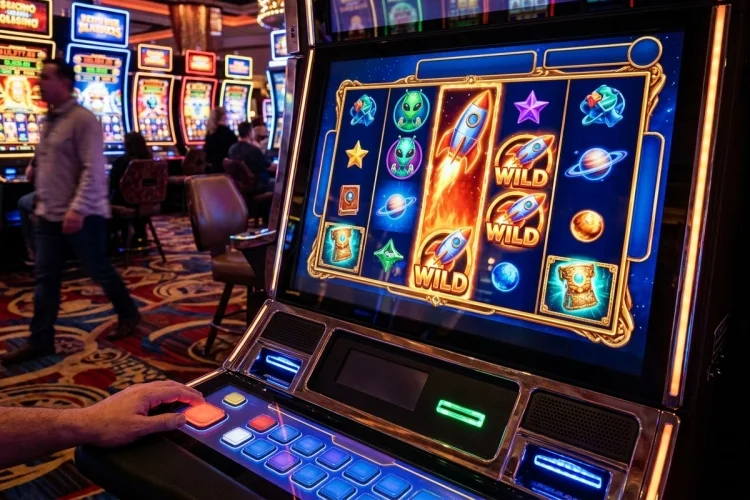
What Are Wild, Scatter, and Multiplier Symbols in Modern Slots?

Slot symbols have evolved far beyond cherries, bells, bars, and lucky sevens. Modern video slots can include expanding characters, collectible icons, mystery symbols, bonus scatters, and multiplier values that change as a feature progresses.

Among these mechanics, wilds, scatters, and multipliers remain the most widely recognized. Yet modern developers frequently combine and modify them. A wild can expand, move, stick, collect prizes, or carry a multiplier.

A scatter can launch ordinary free spins or unlock an upgraded mode. Multipliers can reset after one spin, remain active throughout a feature, or increase following every consecutive win.

Knowing what wild, scatter, and multiplier symbols are is therefore only the starting point. Players also need to understand their variations and restrictions. Special features can make a slot more entertaining, but they can also make its mathematical structure harder to read.

The safest approach is to study the information screen rather than assume that familiar terminology works identically in every game.

Standard and Expanding Wilds

The simplest wild acts as a substitute for regular paying symbols. It fills a missing position in an otherwise valid winning combination.

An expanding wild goes further by covering several positions, sometimes filling an entire reel. Expansion may happen whenever the wild lands, only when it contributes to a win, or exclusively during a bonus feature.

Developers may also restrict an expanding wild to selected reels. These conditions should be displayed in the game instructions because technical standards require symbol locations, limitations, and changing functions to be disclosed clearly.

Stacked, Sticky, and Walking Wilds

Stacked wilds appear in groups on the same reel. If enough of the stack enters the visible grid, it may cover multiple positions and help produce several combinations.

Sticky wilds remain locked in place rather than disappearing immediately. Their duration varies: some last for a fixed number of respins, while others remain until the end of a free-spin feature.

Walking wilds shift across the grid after each round. A walking symbol might move one reel to the left after every respin until it leaves the screen.

These features can extend a game sequence, but they do not make future wins certain. The rules must explain how long each wild remains and whether it substitutes on every occupied position.

Multiplier Wilds

A multiplier wild combines two functions. It substitutes for an eligible regular symbol and increases the value of a qualifying win.

Suppose a standard combination pays 20 credits. If a 3x multiplier wild participates and the rules apply that multiplier to the full line, the award becomes 60 credits.

When several multiplier wilds appear, the method of combining them is essential. Two 2x wilds could be added to produce 4x or multiplied to produce 4x; those examples happen to match. Two 2x and 3x wilds, however, could result in 5x when added or 6x when multiplied.

GLI standards consequently require game instructions to make clear what a multiplier applies to and what it excludes.

Ordinary Scatters and Free-Spin Scatters

A traditional scatter normally pays or activates a feature based on quantity rather than its position on a payline. Three scatters are a common requirement, although games may require four or more.

The number landed may determine how many free spins are awarded. In Jelly Express, three scatters activate a selection of bonus options involving different combinations of spins and multiplier values.

A scatter may also retrigger a bonus once free spins have started. Retriggers can add a fixed number of rounds or extend the feature according to the quantity that appears.

Players should check whether scatter awards and line wins are paid together. Technical standards specifically recognize that rules must explain how simultaneous line and scatter prizes are handled.

Super Scatters and Enhanced Bonus Symbols

Some modern games include a separate symbol commonly described as a super scatter. It may provide an instant prize, improve a bonus feature, or unlock a higher-value version of free spins.

In Gates of Olympus Super Scatter, regular scatters trigger free spins, while super scatters can award separate instant values when they appear as the feature is activated.

The word “super” is a product label, not a standardized mathematical definition. Its meaning depends entirely on the game. In another title, a super scatter could increase starting multipliers, transform symbols, or provide additional spins.

Global, Progressive, and Persistent Multipliers

A global multiplier applies to all eligible winnings within a defined round. It does not need to appear inside each individual combination.

A progressive multiplier increases following particular events. Consecutive cascade wins may move it from 1x to 2x, then 3x, with the progression ending when no new win occurs.

Persistent multipliers can remain active across several free spins. Some games also store different values on particular grid positions. Whenever a new win lands on a marked position, the value may increase or be applied again.

Such features can create large maximum prizes, but the top advertised value is typically connected to rare combinations of events. It should not be confused with an ordinary or expected payout.

How Special Symbols Affect RTP and Volatility

Wilds, scatters, and multipliers contribute to the game’s mathematical design. Part of the theoretical return may come from standard combinations, while another portion comes from free spins, jackpots, or other features.

GLI explains that game-mathematics analysis can separately evaluate contributions from the base game, feature games, and jackpots. It also assesses volatility, which describes the variation in prize distribution.

A feature-heavy game may concentrate a meaningful share of its return in infrequent bonus rounds. That does not automatically mean it has a higher or lower RTP than a simpler slot.

Theoretical RTP becomes meaningful over a large amount of play, and actual short-term results may vary widely because of randomness and volatility.

Why Similar Symbols Behave Differently

There is no universal rule requiring all wilds, scatters, or multipliers to work identically. A symbol’s design, name, or animation cannot replace the written instructions.

One wild may substitute everywhere, while another functions only on the middle reels. One scatter can pay independently, whereas another exists solely to trigger free spins. A multiplier may apply to a single symbol, one line, one tumble, or an entire bonus round.

This flexibility is why approved standards emphasize transparent artwork, paytables, and game descriptions. Symbols should be clearly displayed, their functions identified, and restrictive conditions disclosed.

Modern slots use many variations of wild, scatter, and multiplier symbols. Wilds may expand, stick, move, collect values, or carry multipliers. Scatters can activate free spins, retrigger features, or unlock enhanced modes, while multipliers may apply locally or globally and reset or accumulate.

These mechanics can create variety, but their names alone do not explain their mathematical impact. Every feature must be understood through the individual game’s paytable.

Before placing a wager, review the symbol guide and determine how awards are calculated. Pay particular attention to excluded symbols, required quantities, reel restrictions, and multiplier-combination rules. Keep the total stake affordable and stop when your predetermined spending or time limit is reached.

View More